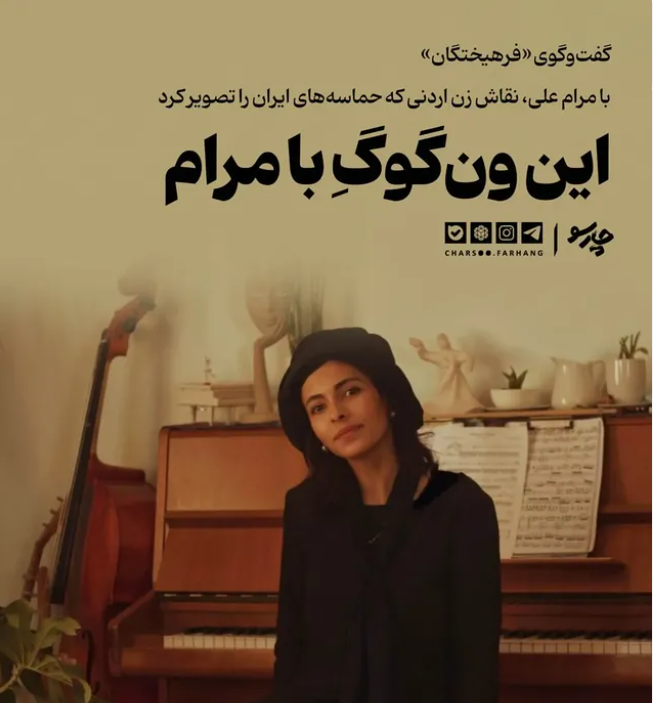
Maram Ali
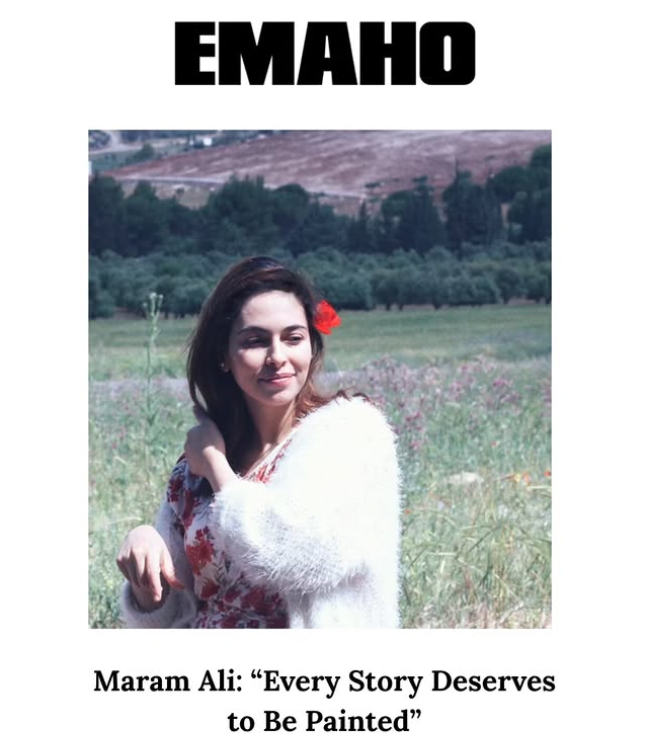
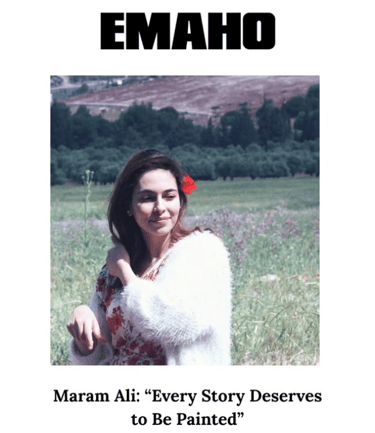
Maram Ali was born and raised in Irbid, Jordan. Her work emerges from a deep sense of ancestral belonging and moral responsibility. Although she has never visited Palestine, its presence has long inhabited her imagination, shaping both her emotional world and her artistic purpose. From early childhood, drawing came instinctively to her; she recalls, “I was drawing before I was writing. I was exactly three years old when I started drawing” (newarab.com).
Alongside this early devotion to art, she pursued formal academic studies and later obtained a degree in finance, while continuing to paint independently and with unwavering commitment. Her connection to Palestine is deeply emotional: “It’s a collective feeling — we love Palestine and we want to visit Palestine” (newarab.com).
In her early practice, Maram Ali painted landscapes and scenes drawn from nature and daily life. These works were marked by sensitivity, calm, and attentiveness to atmosphere. She experimented across media — oil, acrylic, and watercolor — gradually developing a language of paint that privileged emotion over description. Over time, her brushwork grew bolder, more textured, and more insistent, favoring expressive force over formal restraint. She explains, “I leaned into this style from a long time ago because it heightens and exaggerates feelings of a certain situation” (newarab.com).
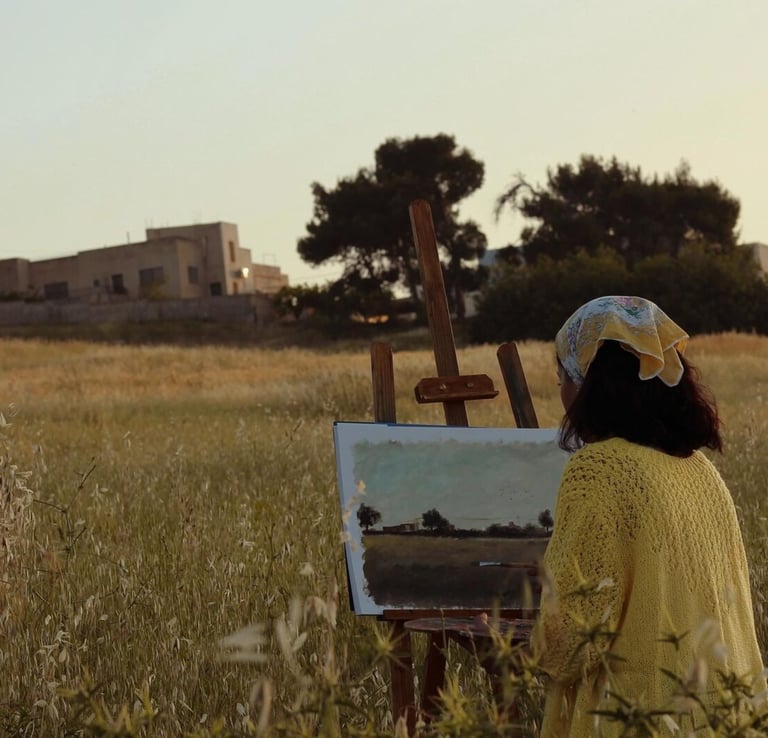
Maram works with sustained intensity. She paints primarily in oil, often surrounded by multiple works in progress, returning repeatedly to each surface. Her process is intuitive and cumulative, driven less by technical perfection than by emotional coherence. Many works remain unresolved, set aside when they no longer offer space for discovery. Others arrive quietly at their conclusion — a moment when gesture, color, and feeling align, and the image begins to breathe.
Maram Ali is a witness. Through painting, she bears testimony to lives interrupted and stories at risk of disappearance. The power of her work lies in its quiet insistence: it compels the viewer to pause, to look, and to remember. She says, “I was drawing before I was writing” (newarab.com) — and this instinctive urge to capture and preserve life continues to define her practice. Standing before her portraits, we sense that something essential has been entrusted to us — a memory, a truth, a life that refuses to vanish.
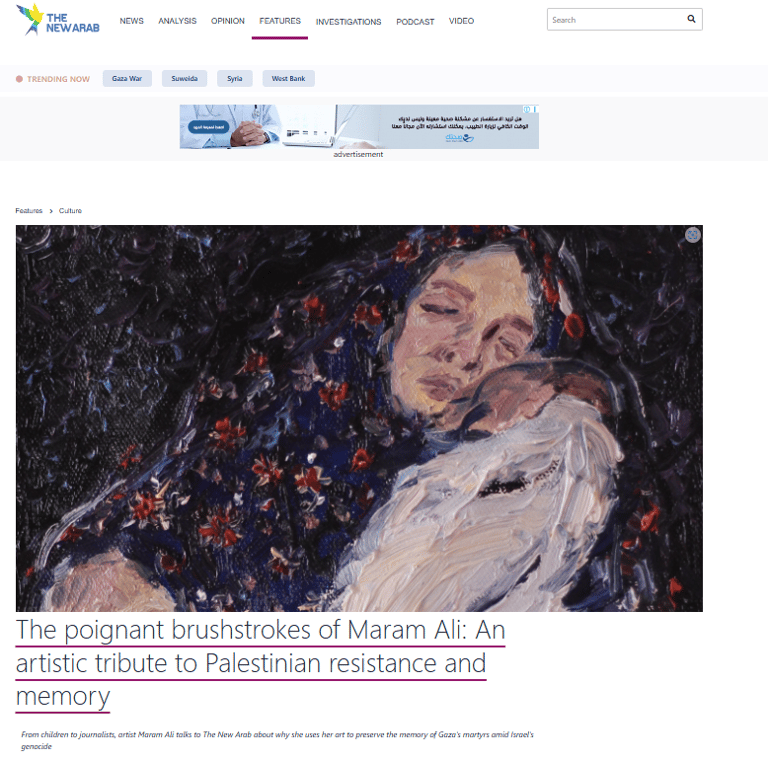
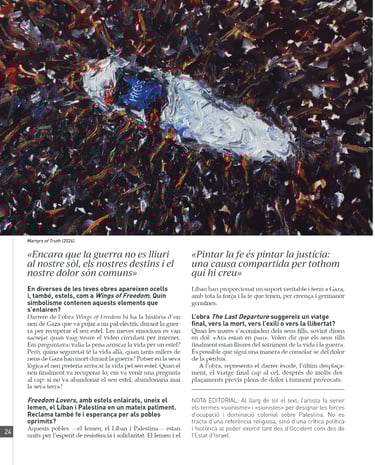
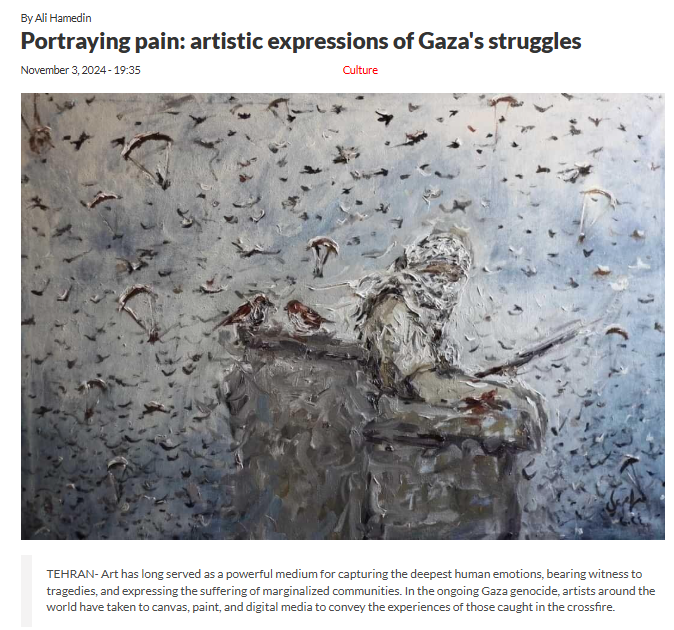
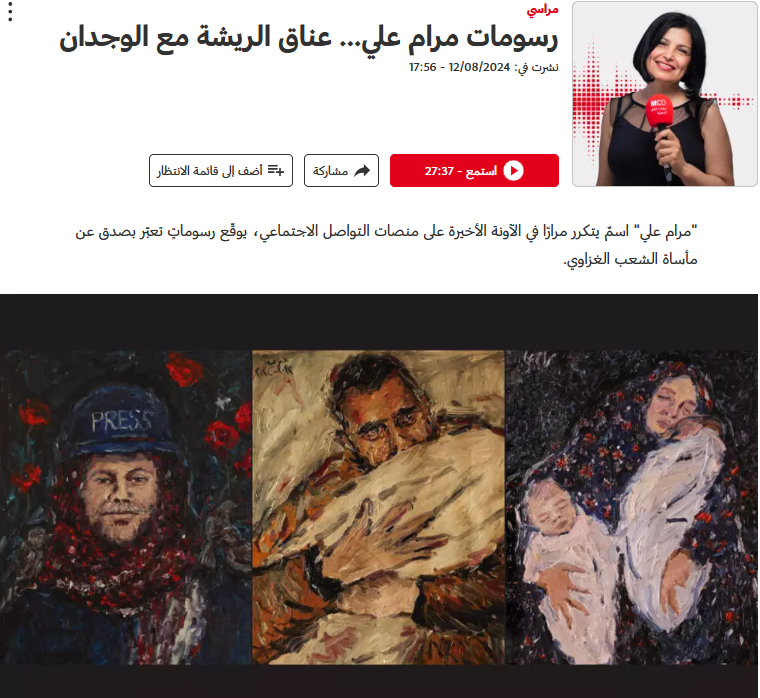
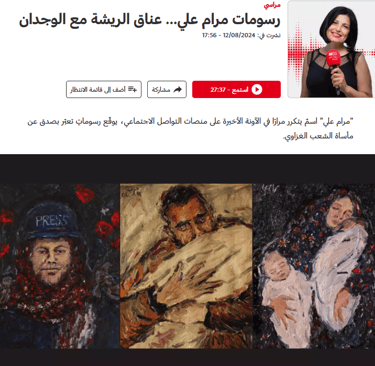
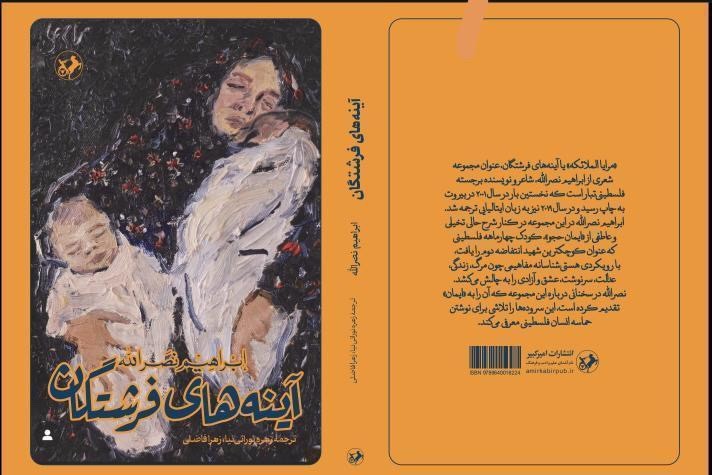
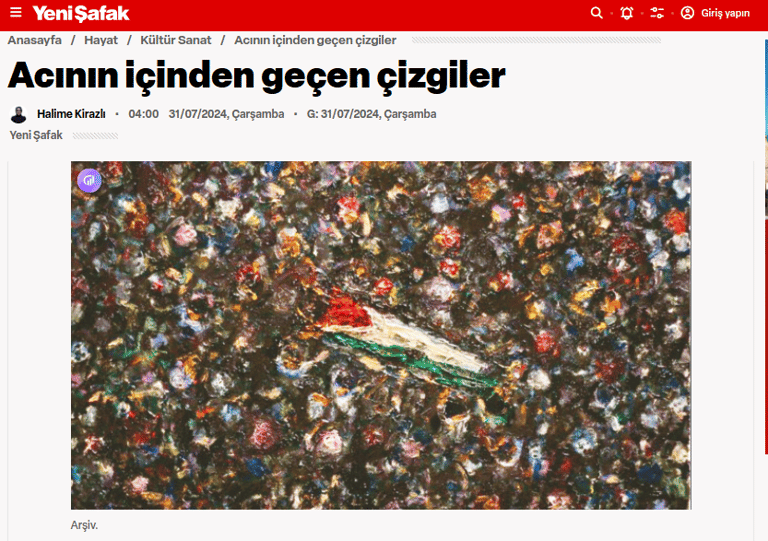
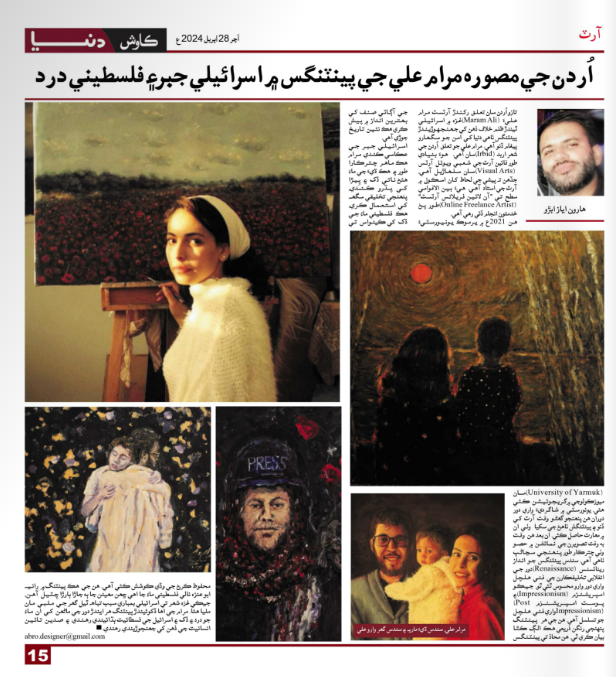
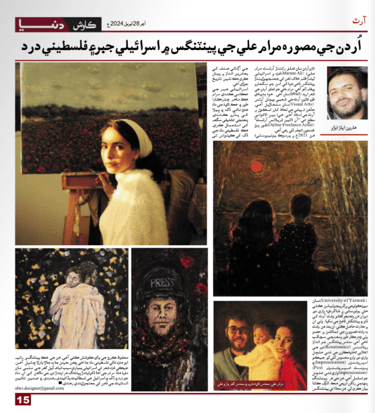
A profound rupture occurred in 2023 with the war on Gaza, and particularly following the bombing of Al-Ahli Arab Hospital. From this moment, Maram set aside her previous subjects and turned almost exclusively toward the human figure. Her canvases became sites of testimony: portraits of children, journalists, doctors, parents, and civilians killed in airstrikes. These works do not aim to reproduce images of violence; rather, they seek to preserve presence. Each painting functions as an act of resistance against erasure, rescuing faces and stories from anonymity and silence (blogs.mediapart.fr).
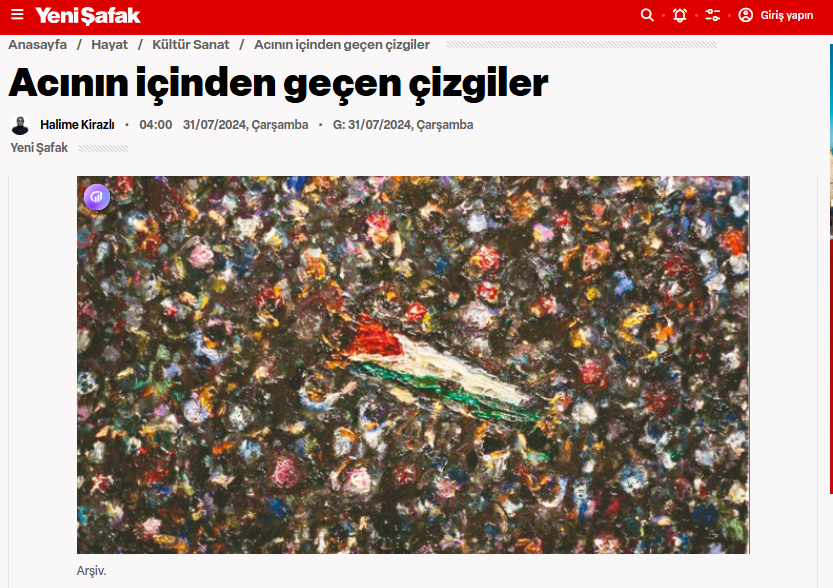
Her paintings inhabit a charged space between life and death. Thick layers of oil paint, forceful gestures, and heightened chromatic contrasts create surfaces that vibrate with urgency. Influenced by impressionistic and post-impressionistic traditions, her work resists stillness. Figures appear to emerge and dissolve simultaneously, as if refusing to be fixed or forgotten. Her canvases operate both as memorials and affirmations — bearing witness while insisting on continued life through memory.
For Maram, painting is inseparable from humanity. She has spoken of her work as a moral response — a way to stand with those who suffer, to affirm their right to exist, to their land, and to their stories. She says, “These are humane stories that we are seeing daily… These are stories of martyrs and their families, displacement, hunger, and diseases. But there is also resistance, which we believe in” (newarab.com). While she acknowledges that no artwork can fully convey the lived reality of pain and loss, she understands her role as one of witnessing: “If we don’t document them, then who will? I am not saying that my works will immortalise them. But as an artist, I must do my part” (newarab.com). She explains her approach in even more poetic terms: “Maram Ali does not reproduce images of genocide; she extracts a living imprint, the seed that will take root. Her canvases, suspended between death and eternity, carry the names of the disappeared and extend their interrupted gestures and stories. Each painting is both a tomb and a birth; it preserves the lives of the dead so that Palestine may live forever” (blogs.mediapart.fr).
“What drives me to paint for Gaza is, first and foremost, my humanity. I am human before anything else, and as a Palestinian refugee, I feel an even deeper connection to the suffering of those in Gaza. However, I do not need to be Palestinian to feel the pain of people experiencing such immense hardship… This is not just about identity; it’s about empathy and a sense of responsibility.” (tehrantimes.com)
Explore the artist's journey, achievements, and notable features in press and publications.
Artist Profile Page

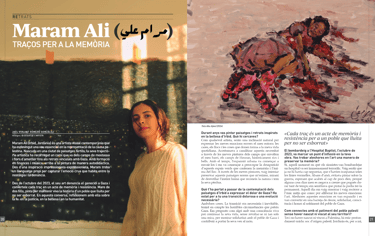
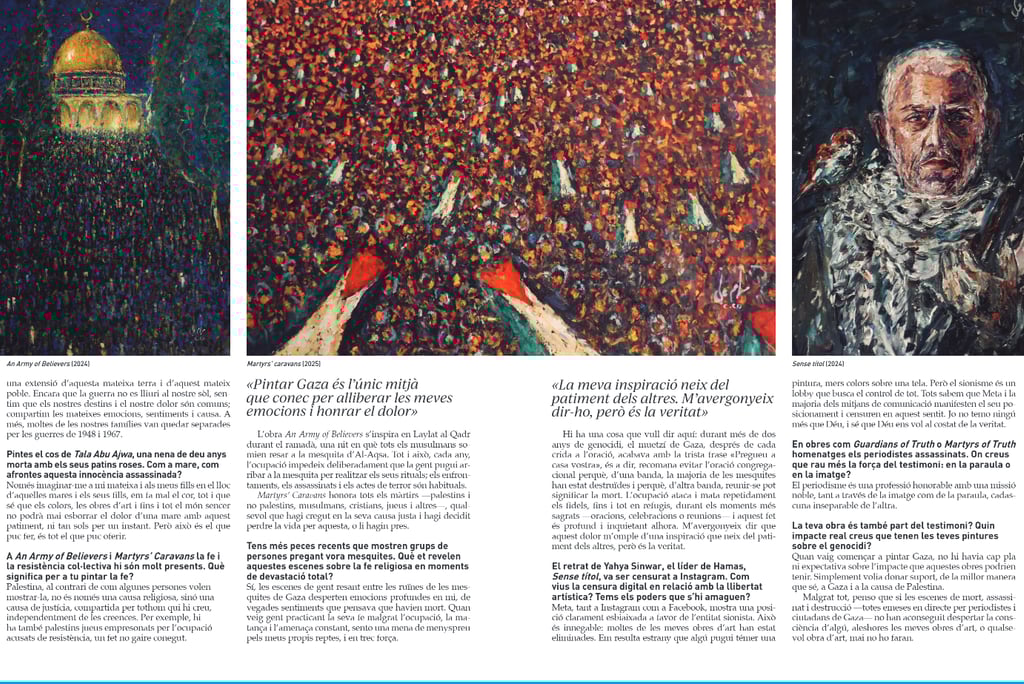
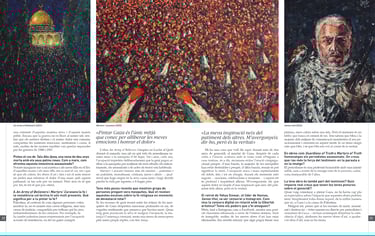
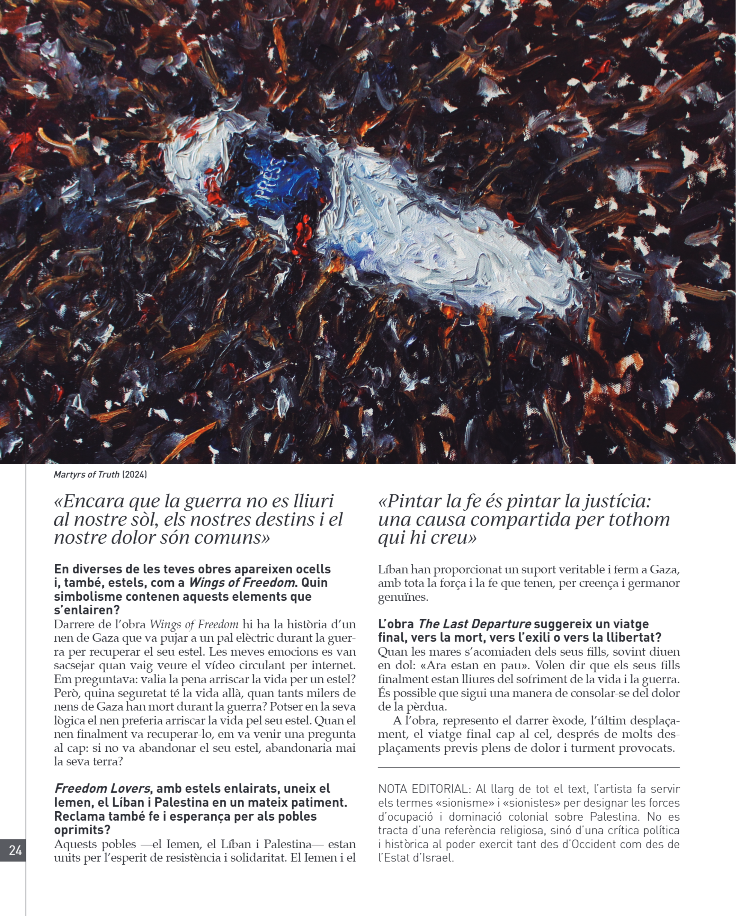
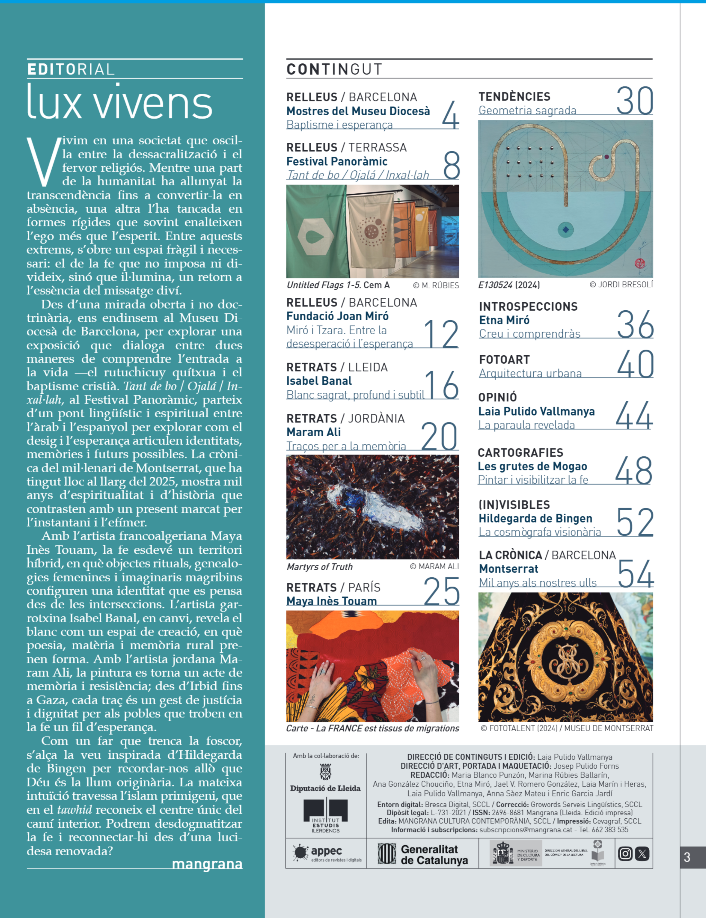
“With Maram Ali, the canvas becomes an act of memory and resistance; from Irbid to Gaza, every brushstroke is an act of justice and dignity for the marginalized, and a space where hope takes form.”
Laia Pulido Vallmanya - MANGRANA. CULTURA CONTEMPORÀNIA
Palestine lives in Soul